Resources
Reference Guide For Asset Management Inventory and Risk Analysis (Wastewater)
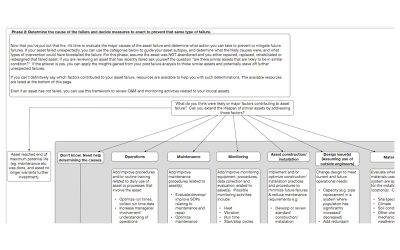
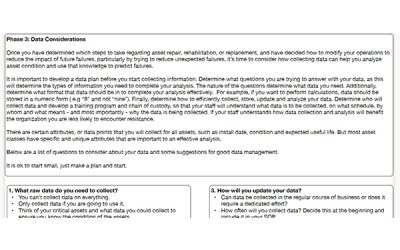
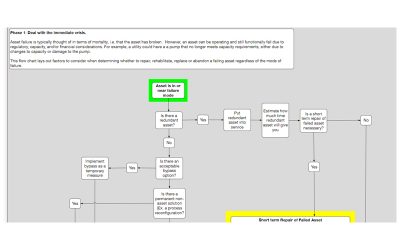
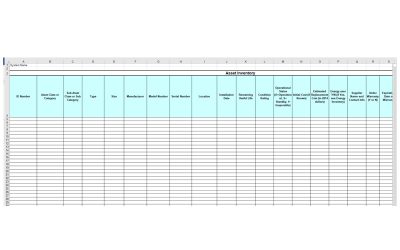
This guidebook provides guidance, by asset type (ie. pipe, pumps, valves, etc.), on what information could be collected when completing an inventory. In a second table, guidance is provided on what to take into consideration when determining probability of failure and consequence of failure.
Life Cycle Costing for Small Water Systems
Asset Management is a process that allows a water or wastewater system to better manage its assets and improve the workday for its employees. It helps improve efficiency and reduce unplanned, reactionary activities in favor of more planned, proactive work. This virtual training module will provide an in-depth and more advanced overview of life cycle costing, and how it can be utilized in assessing risk and capital planning.
Criticality for Small Water Systems
Asset Management is a process that allows a water or wastewater system to better manage its assets and improve the workday for its employees. This virtual training module focuses on factors impacting Criticality and how to analyze and visualize Criticality. We discuss assigning numerical values for POF and COF and how to calculate risk, what can a system do to reduce their Criticality score, redundancy, triple-bottom line thinking, and how use criticality in decision-making.
AM/CMMS Evaluation and Recommendations Report
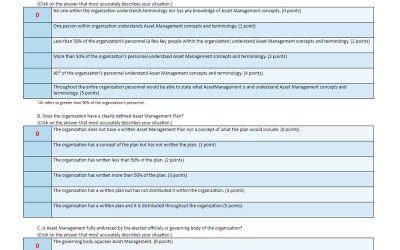
This report helps utilities determine if they need more sophisticated software, reviews some AM/CMMS providers and discusses the various aspects of the software selection process.
Asset Inventory and Mapping for Small Water Systems
As we move beyond the basics of asset management, we will briefly revisit the overall thought-process of asset management during the first part of this training, before focusing on more advanced concepts related to asset inventory and mapping.
Level of Service for Small Water Systems
As we move beyond the basics of asset management, we will briefly revisit the overall thought-process of asset management during the first part of this training, focusing more specifically on more advanced concepts related to level of service.